HEADLINES
Tue, Oct 20, 2026


The Newsroom Ng



Civil Servants in Politics: The Nigerian Reality...
By abidemi ADEBAMIWA
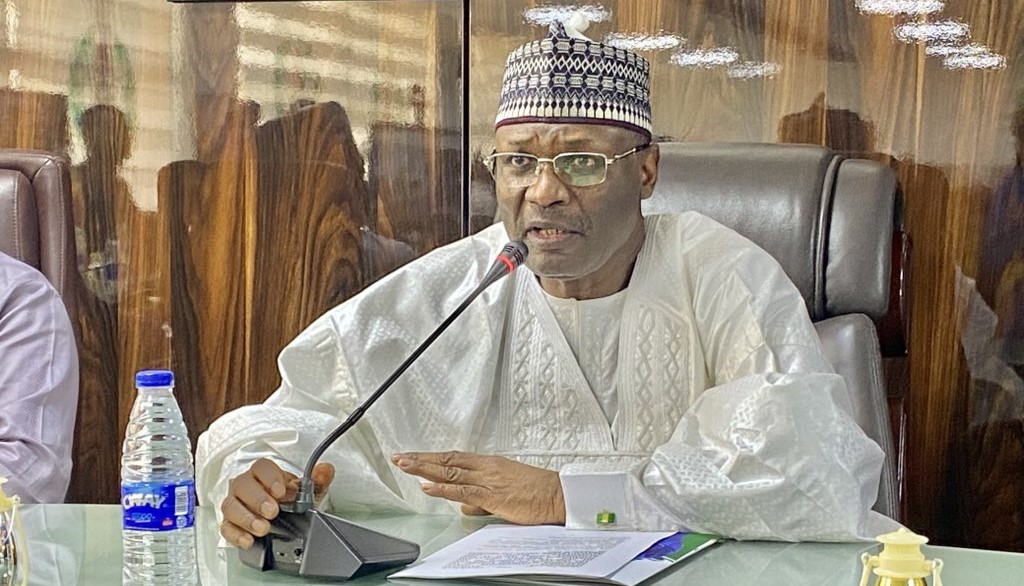 INEC Chairman, Mahmood Yakubu
Let’s talk honestly. Why should a civil servant or agency head be allowed to actively campaign for political office while still collecting a government salary?
In any democracy that values fairness and transparency, this would be unacceptable. But in Nigeria, it’s become part of the political game — and many of us now look the other way.
From directors-general “consulting stakeholders” to permanent secretaries “empowering communities,” the signs are often subtle, but the message is clear: many people are already campaigning while still holding public office.
What the Law actually says (And what It ignores)
Section 84(12) of Nigeria’s Electoral Act 2022 says political appointees must resign before contesting in party primaries. But it doesn’t say anything about campaigning or mobilizing support before those primaries.
So, what happens? Public officers start early — long before their resignation deadline — meeting with delegates, distributing branded items, aligning with political structures, and promoting themselves through official channels. All while sitting comfortably in power.
And what does the Constitution say? It allows civil servants to remain in office until just 30 days before a general election — not before primaries, not before campaigning. Just 30 days before the vote.
That’s not just inadequate. It’s a loophole. And many are walking right through it.
How other Democracies do it
In countries like Ghana, India, and the Philippines, public officials must resign well before elections — sometimes even two years ahead. The idea is simple: you can’t be in power and seek power at the same time.
In the United States, the Hatch Act draws a clear line between public service and politics. Here’s what it says:
Key Provisions
No Partisan Politics at Work: Federal employees cannot engage in political activities while on duty, inside government buildings, using official vehicles, or in uniform.
No Fundraising: They are barred from soliciting or receiving political contributions.
No Running in Partisan Elections: Federal workers are not allowed to run for office in partisan elections.
No Misuse of Authority: They cannot use their office to influence elections.
No Coercion: They cannot pressure others to participate in or contribute to political causes.
The only exceptions? Members of the Armed Forces — who are governed by a separate military code.
But the Hatch Act also makes room for basic political freedoms:
Permitted Activities
Voting and registering to vote
Expressing personal views about issues or candidates
Displaying political signs or buttons at home
Posting political opinions on personal social media
What happens if they violate It?
Consequences under the Hatch Act are serious: removal from service, suspension, demotion, or even a ban from federal employment for five years.
It’s not perfect — but it shows intent. It draws a boundary. It signals that public office is not a launchpad for political self-interest.
The Nigerian Reality
Meanwhile, in Nigeria, a public official can tour constituencies, share branded rice, use state resources to “consult stakeholders,” and still pretend it’s not a campaign — because the law only asks them to resign 30 days before election day.
By the time they finally resign, they’ve already done the real work: name recognition, influence, political alliances, and groundwork — all under the protection of their official title and salary.
This is not democracy. It’s privileged campaigning in disguise.
Time for a clearer Standard
If Nigeria truly values fairness, we must set a new rule:
The moment a civil servant or agency head declares interest, collects nomination forms, or starts any form of political activity — they must resign.
Not after months of quiet campaigning. Not 30 days to the vote. Not when it’s convenient.
Because at the end of the day, you can’t serve the people and serve yourself at the same time. One will suffer. And it’s usually the people.
News in Pictures








Copyright 2026, Thenewsroom.ng
Comments
Be the first to comment on this post
Leave a Reply