




Nigeria's Economy back on track, says Finance Minister
By emmanuel MALAGU
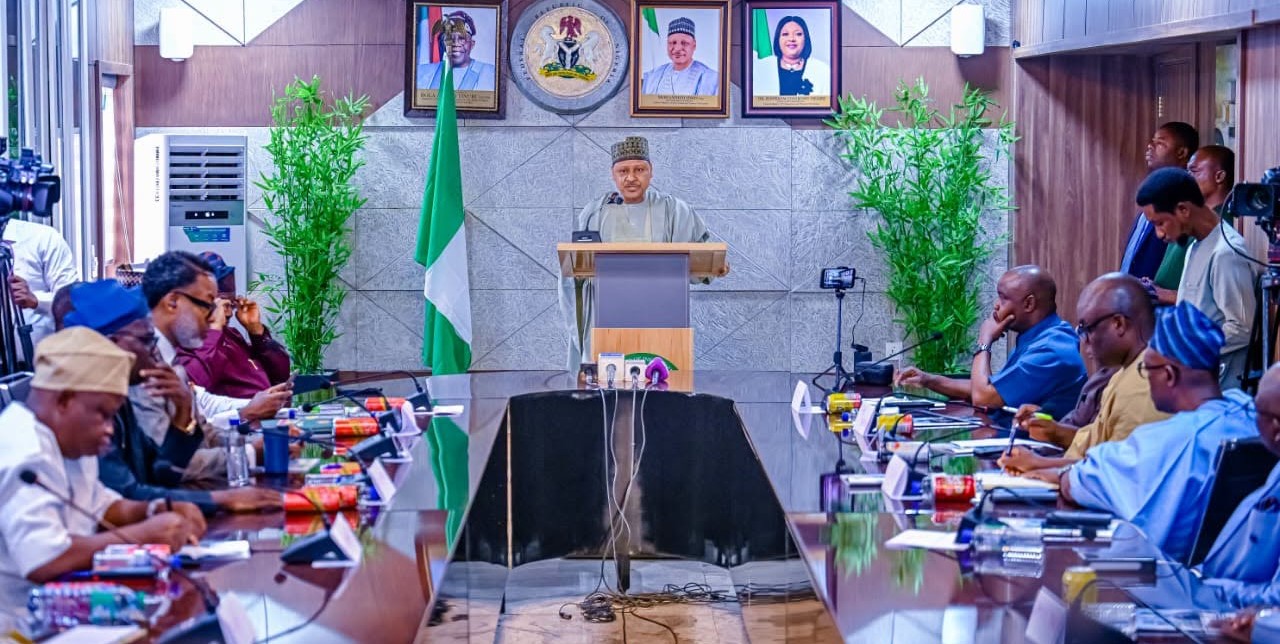
 Minister of Finance and Coordinating Minister of the Economy, Taiwo Oyedele
The Minister of Finance and
Coordinating Minister of the Economy, Taiwo Oyedele, says Nigeria’s economy has
stabilised.
Oyedele started this on Thursday
while briefing State House correspondents after the 158th meeting of the
National Economic Council (NEC) in Abuja.
He, however, said the priority was
now to transform economic stability into shared prosperity for Nigerians.
“Our real Gross Domestic Product
growth rate was 3.89 per cent for Q1 of 2026, up from 3.13 per cent one year
ago,” he said.
Oyedele projected that Nigeria’s GDP
growth rate would exceed four per cent in 2026, reflecting continued
improvement in economic activity.
He said inflation had also declined
significantly, reaching 15.43 per cent at the end of July, compared with 24.94
per cent a year earlier.
According to Oyedele, Nigeria’s
trade surplus nearly doubled from N17.7 trillion in 2025 to N34.7 trillion by
the first quarter of 2026.
He said public debt remained
moderate at 13.7 per cent of GDP, amounting to N159.28 trillion.
“Debt service as a percentage of
revenue is on the decline, from nearly 100 per cent as of 2022 to less than 60
per cent as of 2025,” he said.
Oyedele said the economic progress
was also reflected in improved assessments by international market rating
agencies.
“This is also part of the
recognition by the market rating agencies,” he said.
He said Fitch Ratings, Moody’s and
S&P had all upgraded Nigeria’s sovereign credit rating between April 2025
and May 2026.
“The first coordinated alignment in
over a decade. So, they all agree,” Oyedele said.
The minister said Nigeria also
exited the Financial Action Task Force (FATF) grey list in October 2025.
He added that the country exited the
European Union’s anti-money laundering and counter-terrorist financing
deficiency list in January 2026.
According to him, the developments
would reduce costs and friction associated with cross-border capital flows into
Nigeria.
Oyedele also announced Nigeria’s
reclassification from an unclassified market to a frontier market.
“Nigeria has now been reclassified
to frontier market. This is good news for us as a country,” he said.
He said the reclassification
presented opportunities for Nigeria to accelerate economic growth and lift more
citizens out of poverty.
“We see opportunities ahead for the
country, especially how we accelerate growth and lift our people out of
poverty,” Oyedele said.
He said NEC identified agriculture,
energy, manufacturing, mining and the digital economy as priority sectors for
accelerated development.
Oyedele said 81.4 per cent of
Nigerians worked in agriculture and non-tradable services, requiring greater
attention to those sectors.
“Council deliberated that there is a
need for us to accelerate growth in these sectors where majority of our people
work,” he said.
He said stronger growth in those
sectors would help reduce poverty and narrow the inequality gap across the
country.
“That way, we lift them out of
poverty and we close the inequality gap,” Oyedele said.
The minister, however, acknowledged
that significant challenges remained and required coordinated efforts from the
government and other stakeholders.
“Key areas identified include
geopolitical conflict, commodity shocks, persistent food inflation and the need
to manage election cycle fiscal risk,” he said.
Oyedele also highlighted the need to
address negative pre-election narratives and ensure economic perceptions
remained supported by available data.
He said the government must focus on
creating jobs while managing Nigeria’s vulnerability to foreign-exchange shocks.
“There is a tendency to be negative
pre-election, even though it is not supported by data, to ensure there is
job-rich growth,” he said.
He added that managing
foreign-exchange vulnerability would remain essential to sustaining economic
stability and translating current gains into broader prosperity.
Credit NAN: Texts excluding Headline







Comments
Be the first to comment on this post
Leave a Reply