




Transformational Leadership and the Soul of 2027
By edentu OROSO
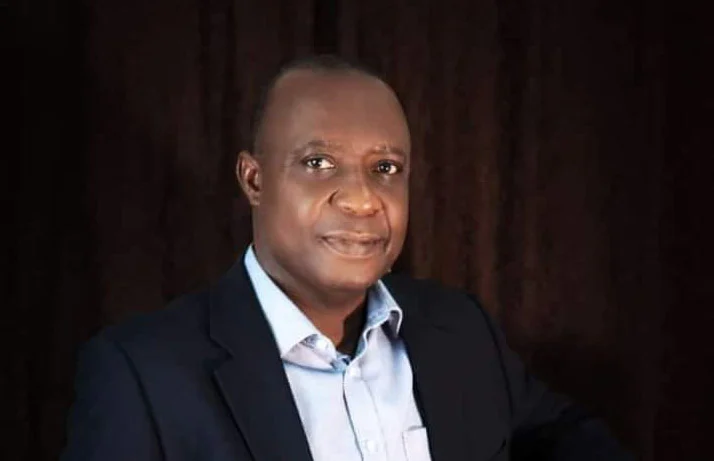
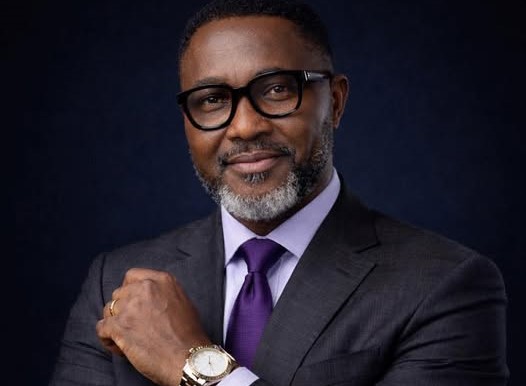
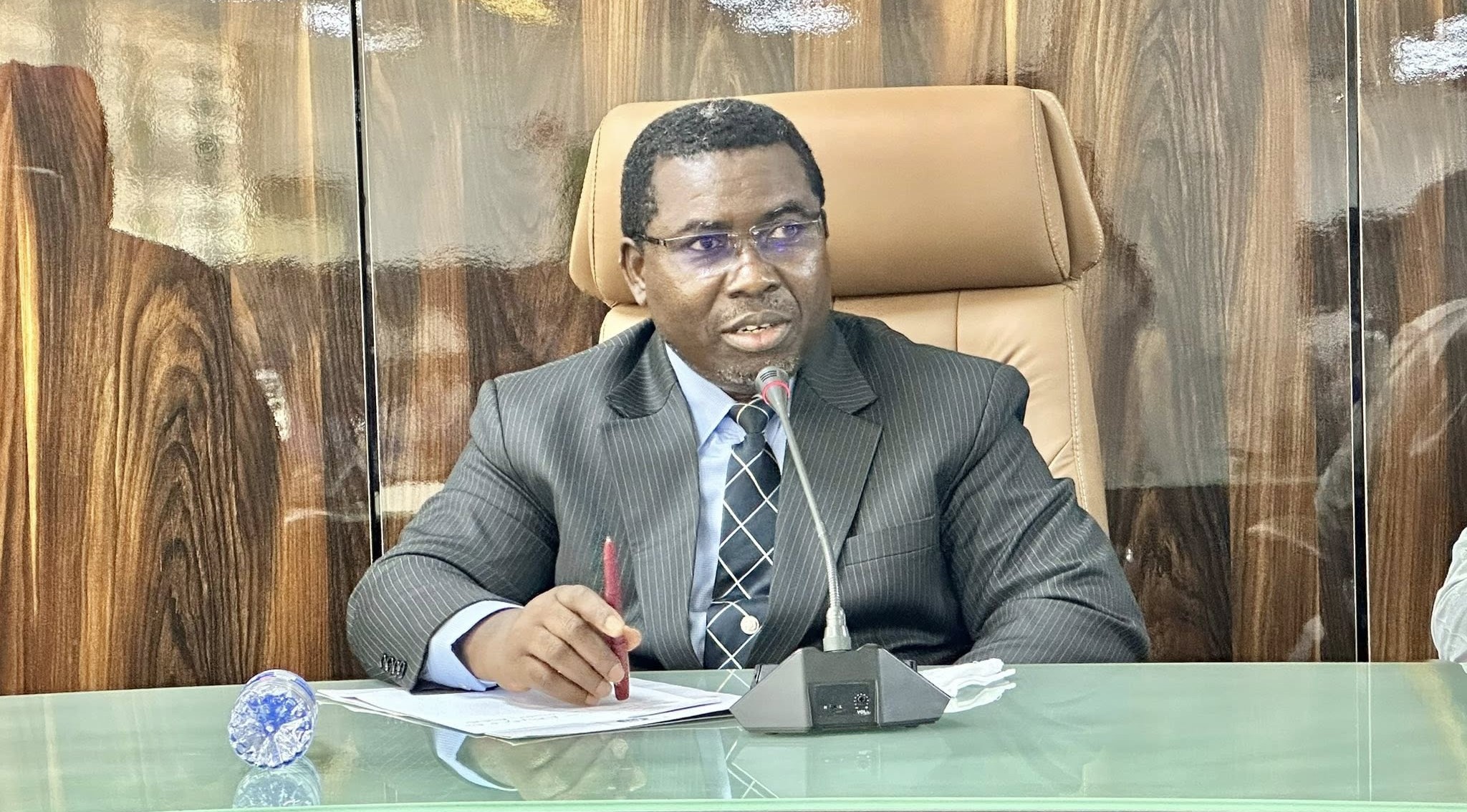 INEC Chairman, Joash Amupitan
By almost every credible measure, Nigeria stands perpetually on the edge of its own vast potential. With the demographic weight of a continental power, the natural resource endowment of a petro-state, the entrepreneurial genius of a people who have built empires from nothing, it is poised for significant greatness, and yet it remains hostage to a recurring tragedy: the wrong hands, holding the highest offices, at the most consequential moments.
As the 2027 presidential election begins its slow approach, already audible in the background noise of political realignments, defections, and the choreographed theater of "consultations," the question that must occupy every serious Nigerian mind is not merely who will contest, but what kind of leadership the moment demands. And whether the electorate, battered and bruised by decades of betrayal, has finally developed the wisdom to tell the difference.
The concept of transformational leadership, first systematically articulated by the political sociologist James MacGregor Burns and later expanded by Bernard Bass, draws a sharp distinction between two modes of political authority. Transactional leadership is the politics of exchange: votes for cash, loyalty for contracts, compliance for patronage. It is leadership as a marketplace, where the electorate is a customer and governance is a commodity. Transformational leadership, by contrast, elevates both leader and follower. It sets a vision beyond the immediate, appeals to higher collective aspirations, builds institutions rather than empires, and measures success not by how much a leader has accumulated but by how fundamentally the conditions of ordinary lives have changed. Nigeria has had an abundance of the former. It is desperately in need of the latter.
The 2027 election will likely be the noisiest, most expensive, and most choreographed political contest in the country's history. Already, the familiar mechanics are in motion. Godfathers are positioning. Endorsements are being auctioned. Consultants are calibrating the messaging. And somewhere in this machinery, enormous sums of money are being assembled to purchase the outcome. The electorate, particularly the young, the poor, the geographically marginalised, will once again be targeted not as citizens whose mandate must be earned, but as variables to be managed, bought, and neutralized.
This is the trap. And it is a great and avoidable trap with historical evidence.
Since the return to democratic governance in 1999, Nigeria has cycled through administrations whose primary credential was financial muscle and political machinery, not goal-orientated or programmatic vision. The result is not a mystery. Infrastructure has decayed faster than it has been built. The education system has produced millions of graduates without skills or prospects. Healthcare delivery has collapsed so thoroughly that the political class routinely flies abroad for routine medical attention, itself the most damning verdict on their stewardship. Insecurity has graduated from a regional inconvenience to a national crisis. Unemployment, particularly youth unemployment, has become a structural catastrophe. Inflation has eroded the purchasing power of ordinary Nigerians to a point where the simple act of feeding a family has become a daily act of heroism.
None of these crises is accidental. They are the cumulative product of decades of transactional governance, leadership that asked "what can this office do for me and my network?" rather than "what must I sacrifice to transform this country?" The moneybag candidate, the one who arrives with convoys and largesse and the swagger of someone who has already purchased the outcome, is not merely a symptom of this failure. He is its architect and its perpetuation.
What should Nigerian voters be looking for instead?
First, a candidate must come with a coherent, specific, and intellectually honest transformational agenda. Not a manifesto of platitudes. Not the recycled language of "poverty alleviation" and "youth empowerment" that has decorated every campaign brochure for thirty years without producing measurable results. A genuine agenda names the structural failures, identifies their causes without sentimentality, and proposes interventions with timelines, metrics, and accountability mechanisms. The electorate should demand, and political journalists should compel, detailed policy positions: What precisely will be done about the tax-to-GDP ratio, currently one of the lowest in the world? What is the specific plan for the power sector, which has consumed trillions in public funds while delivering a fraction of the electricity that a modern economy requires? What is the model for agricultural transformation that will reduce food insecurity without creating perpetual subsidy dependency?
Second, Nigerians must evaluate the character of proactive execution. A transformational leader does not merely articulate vision; he or she creates momentum, manages complexity, and bends the bureaucratic machinery toward outcomes. This requires demonstrated competence, a record, however imperfect, of having run something, solved something, built something, not the usual banal and self-serving rhetoric. The 2027 field must be interrogated not by the warmth of a candidate's rhetoric but by the coldness of their biography. What have they actually delivered? Where have they governed, and with what results? Leadership cannot be performed only on a campaign stage. It must be evidenced in a body of work.
Third, and perhaps most critically in our present moment, a transformational leader must demonstrate institutional respect. Nigeria's democratic deficits are not merely products of bad policy. They are products of leaders who subverted the institutions designed to check their power, who packed courts, captured agencies, intimidated the press, and treated constitutional provisions as inconveniences to be managed rather than guardrails to be honoured. The next president must be someone with a proven disposition to strengthen institutions, not merely invoke them when convenient. This means an independent judiciary. A legislature with genuine oversight capacity. A civil service insulated from partisan capture. A press that can investigate and publish without existential fear. These are not luxuries. They are the architecture within which any transformational agenda must live or die.
Contemporary governance also demands a leader fluent in the realities of a connected, climate-stressed, geopolitically shifting world. Nigeria cannot afford a president whose worldview was formed entirely in the era of oil abundance and cold-war alignment. The energy transition is real and it is coming; an oil-dependent economy without a credible diversification strategy is an economy on borrowed time. Digital infrastructure is now a fundamental determinant of economic competitiveness; a candidate who cannot articulate a serious technology and innovation policy is a candidate who cannot lead a twenty-first century state. Climate vulnerability, floods, desertification, displacement, is already reshaping the security and agricultural landscape in ways that demand policy responses of considerable sophistication.
To the Nigerian voter, especially the young voter who carries the demographic and moral weight of this election, the message must be direct: the naira handed to you at a rally is not investment. It is the price a politician has placed on your future. The candidate who distributes cash with the most flamboyance is not demonstrating generosity, he is demonstrating that he regards you as purchasable. The temporary satisfaction of that transaction will be repaid, with compound suffering, over the four or five years that follow.
The democracy Nigeria deserves is not an event that happens every four years. It is a practice, sustained between elections by an electorate that holds power accountable, by a civil society that refuses to be co-opted, and by a press that speaks truth regardless of consequence. But elections are where the most consequential choices are made. And 2027 will be among the most consequential of our democratic era.
The question is not who has the money. The question is who has the plan, the character, the competence, and the courage to transform a nation that has been waiting, with extraordinary and increasingly exhausted patience, to become what it has always had the capacity to be.
Nigeria does not need a bigger spender. It needs a builder. And builders, unlike buyers, leave something standing when they are gone.

Comments
Be the first to comment on this post
Leave a Reply