




Ants: How these Tiny Creatures Communicate without...
By victoria MALAGU
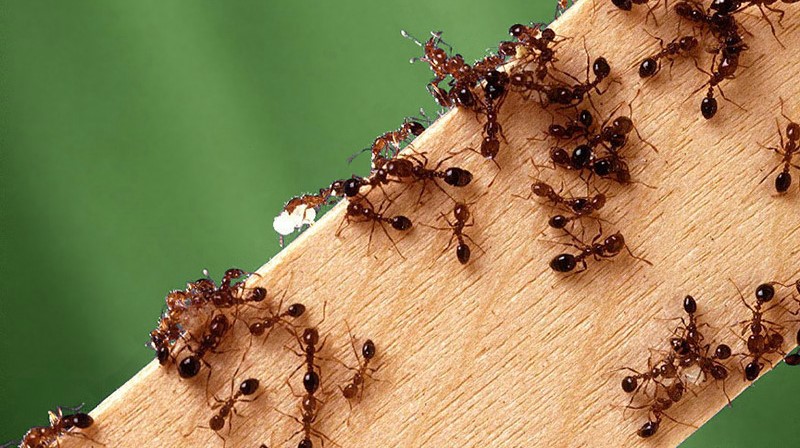 Fire Ants
Ants? They are insects we see every single day. In our homes, in public places and anywhere you can possibly think of. They are such interesting creatures and organised at that.
Do you know that ants communicate with each other using what we call pheromones? Well, you might not know that, so journey with me on this.
Ants are among the most organised social insects in the world. They live in colonies where thousands, and sometimes millions, of individuals work together to find food, protect their nests, care for their young and maintain their communities.
An ant colony operates almost like a well-organised community, with different members
performing different duties to ensure their survival. Depending on the species, an ant colony may consist of a queen, worker ants and male ants.
The queen is usually the reproductive centre of the colony. Her primary responsibility is to lay eggs, which eventually develop into new members of the colony. Contrary to what many people believe, the queen does not sit on a throne giving instructions to the other ants. She does not command the workers or make daily decisions for the colony.
Instead, the worker ants carry out activities such as searching for food, building and maintaining the nest, caring for the eggs and larvae, and protecting the colony. Worker ants are generally female and, in many species, are unable to reproduce.
Male ants, on the other hand, are primarily involved in reproduction. They mate with reproductive females, usually during a mating flight, and often die shortly afterwards. Interestingly, not every ant colony has just one queen. Some species have colonies with multiple queens, while others have only one. The structure and organisation of an ant colony depend largely on its species.
But how do ants communicate without speaking?
Now, this is where things get interesting! Unlike humans, ants do not communicate through spoken words. Instead, they rely on chemical signals, physical contact and vibrations to pass information to one another.
One of their major forms of communication is through chemicals known as pheromones. Pheromones are chemical substances released by an organism that influence the behaviour of other members of the same species.
For instance, imagine an ant leaving its nest in search of food. It eventually discovers a food source and begins its journey back to the colony. Along the way, it deposits a chemical trail known as a trail pheromone.
Other ants can detect this chemical trail using specialised sensory receptors on their antennae. They then follow the trail to locate the food. As more ants follow the route, they may deposit additional pheromones, reinforcing the trail and attracting even more ants. This explains why we often see ants moving in long, organised lines towards a food source.
How do ants alert one another when there is danger?
Just like humans have ways of raising the alarm when there is an emergency, ants also have their own warning system.
When some ant species detect a threat, they release alarm pheromones. These chemical signals alert nearby ants and can trigger defensive reactions.
Other members of the colony may respond by attacking the intruder, protecting the nest or moving away from danger, depending on the situation. Some ant species also communicate through vibrations. They produce these vibrations by rubbing specialised body parts together, a process known as stridulation. The vibrations can travel through the nest material and serve as signals, particularly during situations involving danger or distress.
Another fascinating aspect of ant behaviour is their ability to recognise members of their own colony. Ants have chemical profiles on their outer body surfaces that help them identify one another. These chemical signatures allow them to distinguish their nestmates from ants belonging to other colonies. This is particularly important because ants are often territorial and may attack ants they recognise as outsiders.
The next time you see a line of ants moving towards a piece of food, take a moment to appreciate what is happening. What may look like a group of tiny insects simply moving around is actually a well-coordinated system of communication and cooperation.
Ants may not speak, but they certainly have their own ways of passing information, responding to danger and working together. It is fascinating how such tiny creatures can demonstrate such remarkable levels of organisation.








Comments
Be the first to comment on this post
Leave a Reply