NSX
Forex
NCC
TOP STORIES

Boosting UK-Africa Trade Links: Zenith Bank set to 'Go Live' in Manchester

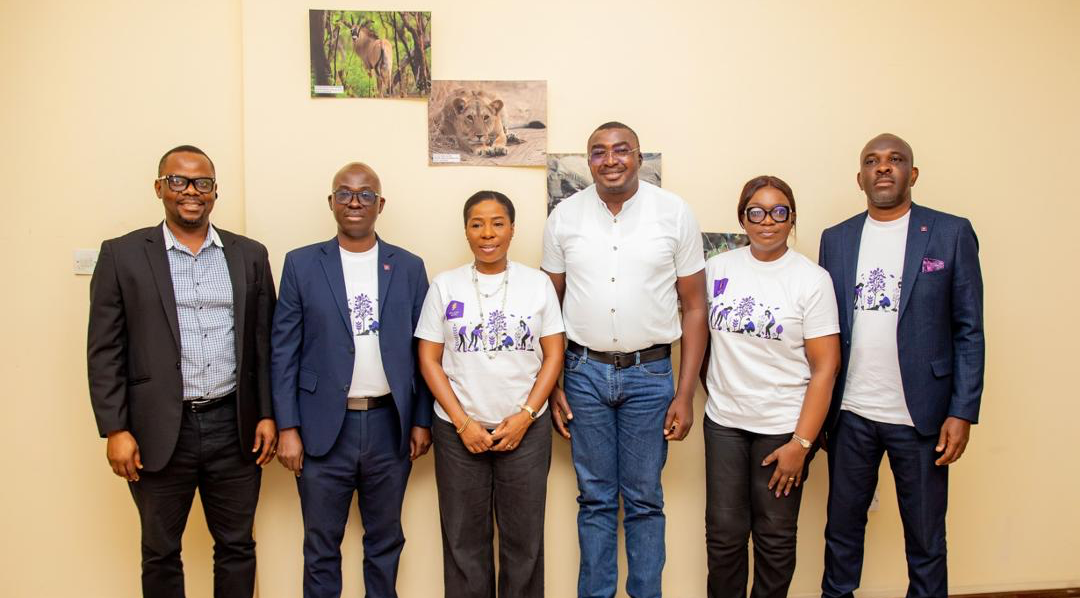
Zenith Bank Plc has announced the opening of a new branch in Manchester, United Kingdom, marking another significant milestone in the bank’s international growth and its commitment to strengthening financial connections between Africa and global markets.

The official opening ceremony, scheduled to hold on Tuesday, March 17, 2026, is expected to attract government officials from Nigeria and the United Kingdom, regulators, investors, customers, and business leaders from both countries, underscoring the growing economic ties and investment opportunities between the two markets.

The new Manchester branch will complement Zenith Bank’s existing operations in the United Kingdom and serve as a strategic hub for supporting businesses engaged in international trade and investment. Through the branch, the bank will provide corporate banking, trade finance, treasury and related financial services to clients operating across the United Kingdom, Europe and Africa.

Speaking ahead of the launch, the Group Managing Director/Chief Executive Officer of Zenith Bank Plc, Dame Dr. Adaora Umeoji, OON, said: “The opening of our Manchester branch represents another important step in Zenith Bank’s growth as a leading African financial institution connecting businesses and markets across continents. Manchester is one of the United Kingdom’s most dynamic commercial centres, and our presence here will further strengthen financial connections between businesses in the UK and opportunities across Africa’s rapidly expanding markets.”

Founded in 1990 by its Founder and Chairman, Jim Ovia, CFR, Zenith Bank has grown into one of Africa’s most respected banking institutions, boasting a robust capital base and a remarkable history of year-on-year profitability. Built on a strong foundation of people, technology and service, the Bank has consistently delivered innovative financial solutions while maintaining a disciplined approach to growth and risk management. The impressive performance of the Bank has consistently earned it excellent ratings, recognition and endorsement from local and international agencies and institutions.

Headquartered in Lagos, Nigeria, Zenith Bank operates over 500 branches and business offices across the 36 States of the Federation and the Federal Capital Territory (FCT). The Bank currently operates subsidiaries in several African countries including Ghana, Sierra Leone, Gambia, and Cote d’Ivoire, while maintaining a presence in major international financial centres including the United Kingdom, France, UAE and China. In recent years, Zenith Bank has continued to expand its international network as part of its strategy to support global trade and investment flows involving Africa.

Manchester, widely regarded as one of the United Kingdom’s most vibrant economic centres, hosts a diverse base of businesses across sectors such as manufacturing, engineering, logistics, technology and consumer goods. The city’s strong commercial ecosystem and international outlook align closely with Zenith Bank’s expertise in corporate banking, structured finance and trade finance.

The Manchester branch will work closely with the Bank’s London operations and its broader international network to support clients seeking to expand across markets and unlock new opportunities in both the United Kingdom and Africa.

With the opening of the Manchester branch, Zenith Bank continues to advance its vision of building a truly global African banking institution that connects businesses, facilitates trade and investment, and creates stronger economic bridges between Africa and the world.

Credit Zenith Bank PR
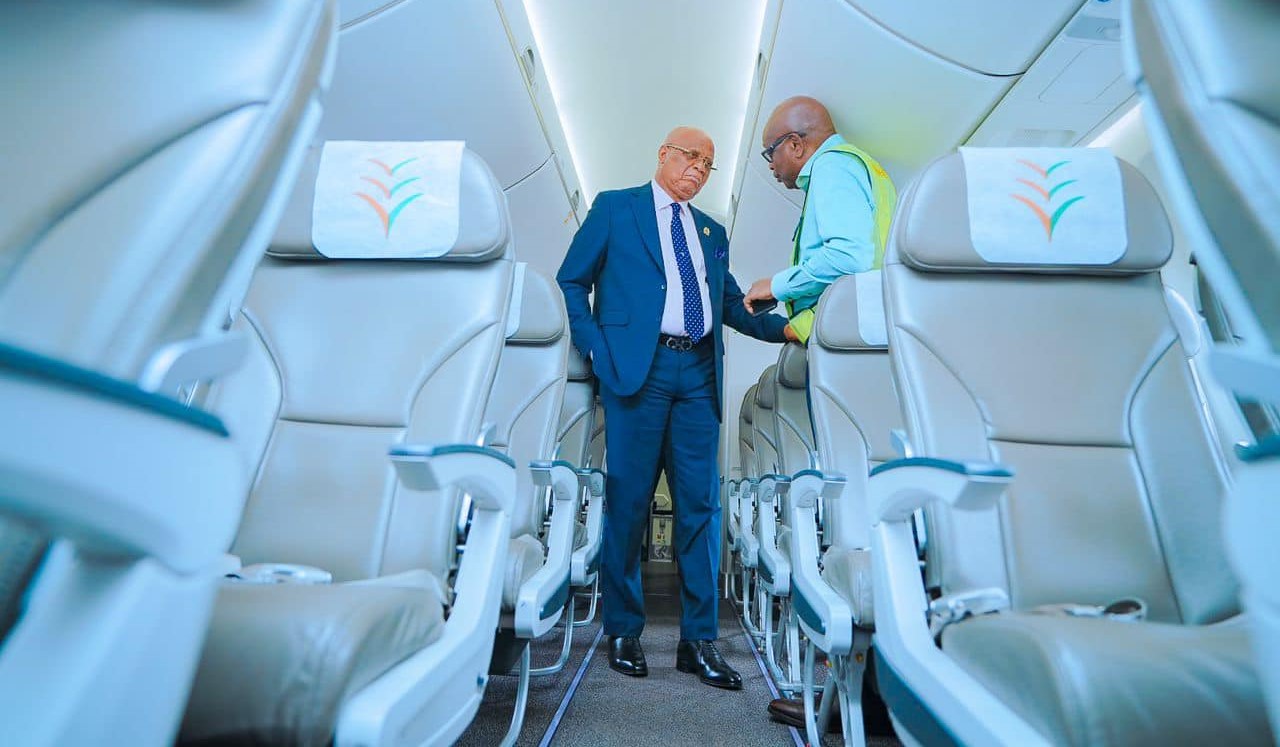
Boosting UK-Africa Trade Links: Zenith Bank set to 'Go Live' in Manchester
Economy
16-Mar-2026

Bwala and the Theatre of Political Shamelessness - When the Camera Doesn’t Lie

There is a particular kind of embarrassment, slow-burning, nationally televised, and impossible to not to see, that visited Nigeria on the evening of March 6, 2026. It arrived on Al Jazeera’s Head to Head, one of the most rigorous interview programmes in global journalism, hosted by Mehdi Hasan, a man widely regarded as one of the sharpest interrogators in the world. The subject in the hot seat was Daniel Bwala, Special Adviser to President Bola Tinubu on Media and Policy Communication. What unfolded in those forty-nine minutes was not merely an uncomfortable interview. It was a masterclass in the consequences of abandoned principle, and a mirror held up to the deeper rot in Nigeria’s political culture.

The premise of the programme, titled “Nigeria: ‘Renewed Hope’ or ‘Hopelessness’?”, was straightforward. Hasan intended to interrogate Tinubu administration on three central pillars: security, the economy, and corruption. What he got, and what the world got, was something far more revealing: a man publicly caught between the person he once was and the functionary he has chosen to become.

Hasan confronted Bwala with his own past words. Video clips. Documented quotes. Statements made when Bwala was a fierce member of the opposition, campaigning vigorously for former Vice-President Atiku Abubakar, in which he had described President Tinubu as corrupt, unfit to govern, and far worse. The response from Bwala was stunning in its audacity. “I never said that,” he told Hasan, even as the footage played. When the clips made denial impossible, he pivoted to a new defence: “The job of opposition is to oppose.” It was, to borrow a phrase, the political equivalent of a man caught in the rain insisting he is not wet.

The internet was merciless. Within hours, the interview had garnered over 400,000 views on YouTube alone. On X (formerly Twitter), Nigerians dissected every evasion with surgical wit. One commentator captured the national mood precisely: “Bwala did his research on Mehdi Hasan but thought he could swing it.” Another described the spectacle as “a show of shame of the highest order.” Farooq Kperogi, a professor of journalism and sharp political analyst, wrote pointedly that “what viewers saw on Mehdi Hasan’s Head to Head was the spectacle of a presidential spokesman arriving unarmed to a firefight he should have anticipated.”

Bwala’s own post-interview defence has been equally revealing. In a statement issued days after the programme aired, he described himself as having appeared “with ease and joy,” dismissed critics as largely opposition sympathisers, and invoked Donald Trump’s cabinet as a precedent, arguing that many officials in Trump’s administration had previously criticised the former US president. He also complained that Al Jazeera had not warned him that his past statements would be raised, implying that fair warning would have altered his performance. The admission, inadvertently, was damning: it confirmed that what viewers saw was not a man defending truth but a man caught without his prepared script.

There is, of course, an argument, thin but frequently made, that politics everywhere involves shifting alliances, and that yesterday’s opponent is tomorrow’s ally. It is true. Politics is not theology. But there is a fundamental difference between changing one’s political affiliation and lying, before a global audience, about things one demonstrably said, while the video evidence rolls on screen behind you. The first may be pragmatic. The second is simply dishonest.

What the Bwala interview exposed is a character flaw that goes deeper than partisan flip-flopping. It speaks to a system that actively rewards the abandonment of conviction. In Nigerian political life, the path to appointment, relevance, and access runs not through the maintenance of principled positions, but through the performance of loyalty - however freshly acquired and however inconsistent with one’s public record. Bwala was a passionate and vocal critic of the man he now defends with equal passion. That is not evolution of thought. That is the transactional reinvention of self, dressed up as public service.

The damage, regrettably, extends beyond Bwala himself. Nigeria sent a representative to one of the world’s most watched interview stages, and that representative chose denial over dignity. In an era when Nigeria’s global image is already battered, by headlines on insecurity, economic hardship, and governance questions, the sight of a presidential spokesman being walked through his own contradictions, on international television, compounds the injury. It tells the world that the people entrusted to speak for the Nigerian state are not men and women of independent conviction, but appointees prepared to say whatever the moment demands, even when the camera has memory and the tape does not lie.

Nigeria’s National Human Rights Commission, as cited during the interview, reported that at least 2,266 people were killed by bandits or insurgents in the first half of 2025 alone. These were the urgent national questions that deserved rigorous engagement. Instead, the interview became derailed by a spokesman’s inability to account for his own statements, a failure that robbed the country of a genuine policy conversation on the world stage.

In the aftermath, a PDP chieftain named Segun Showunmi rushed to Bwala’s defence, condemning Hasan’s style as “outright hostility” and an “attempted public ambush.” The defence is unconvincing. Mehdi Hasan’s method is well known. It is publicly documented across years of broadcasting. Any spokesperson accepting an invitation to Head to Head has, by definition, consented to precision and accountability. To complain that a journalist asked hard questions is to complain that a surgeon used a scalpel.

The deeper lesson from the Bwala episode is not really about one man. It is about the kind of political culture that produces such men, promotes them, and then defends them when they falter. A culture in which a spokesman can, with apparent comfort, look into a global camera and deny the undeniable, because he has calculated that domestic political loyalty matters more than international credibility. A culture in which the word “context” is stretched beyond recognition to cover not just nuance, but outright reversal. A culture in which the most vocal critics of power today are simply the most enthusiastic defenders of power tomorrow, provided the right offer arrives.

Bwala has said he looks forward to a Part Two of the interview, confident that by then, his past statements “will no longer be news.” He may be right about the news cycle. Nigerian public attention is famously short. But character, once revealed in the full glare of an international spotlight, is not so easily reset. The camera has already spoken. The record will remain.

Nigeria deserves spokespeople who speak with consistency, argue with evidence, and, when challenged, defend their positions with facts rather than retreat into denial. Until we build a political system that demands such people and rewards such conduct, we will keep sending to the world’s stage, in the words of that widely-shared social media commentary, men who arrive unarmed to firefights they should have anticipated.

Bwala and the Theatre of Political Shamelessness - When the Camera Doesn’t Lie
Roses with Oroso
15-Mar-2026

Deadly Truck–Minibus Accident claims 4 Lives on Lekki–Epe Expressway

The Lagos State Traffic Management Authority (LASTMA) says four passengers died in a crash involving a truck and a Suzuki commercial minibus in Ajah, Lagos.

LASTMA General Manager, Olalekan Bakare-Oki, confirmed the incident in a statement issued on Sunday in Lagos.

Bakare-Oki said four other passengers sustained severe fractures in the accident opposite Beechwood, Shapati, inward Ajah, along the Lekki–Epe Expressway.

He said the fatal collision involved a HOWO truck with registration number KNN 313 YL and a fully loaded Suzuki commercial minibus, popularly called “Korope”.

According to him, preliminary findings showed the articulated truck driver lost control while moving, veered across the carriageway and rammed into the oncoming commercial minibus.

“The catastrophic impact caused the immediate death of four male passengers.

“Four other occupants, two males and two females, sustained severe fractures after becoming trapped in the mangled wreckage of the vehicle,” he said.

He said LASTMA personnel quickly mobilised to the scene and carefully rescued the trapped victims with assistance from emergency responders and passers-by.

The injured victims were immediately taken to Hamon Royal Hospital for urgent medical treatment.

“The remains of the four passengers who died were evacuated and deposited at Shency Hospital morgue by an FRSC emergency ambulance,” he said.

Bakare-Oki said police officers provided security at the scene and assured that a thorough investigation would determine the cause of the accident.

“The truck driver and his motor boy absconded shortly after seeing the magnitude of the incident,” he said.

He urged motorists, particularly articulated vehicle drivers, to exercise caution, obey traffic regulations and adopt responsible driving habits to prevent avoidable road tragedies.

Credit NAN: Texts excluding Headline

Deadly Truck–Minibus Accident claims 4 Lives on Lekki–Epe Expressway
News
15-Mar-2026

News